
A tetrapod is a four-legged concrete block, placed over the outer face of breakwaters and coastal protection works to break wave energy. The name is Greek for "four feet".
Why four legs
A stack of plain concrete blocks faces two problems against waves: water runs up the face, and blocks roll out of position. Tetrapod geometry answers both:
- Interlocking — the legs nest between one another; the stack behaves as a single mass and pulling out a single block becomes difficult
- Porous stack — voids remain between blocks; waves enter them and lose energy to friction instead of reflecting
- Random placement — no set arrangement is needed, blocks are simply craned into position
A tetrapod armour layer therefore dissipates more energy with less concrete than a solid block wall.
Typical sizes
Tetrapod weight is selected for the design wave height and varies by project:
| Class | Weight range | Typical use |
|---|---|---|
| Small | 1–3 tonnes | Armour layer, inner sections |
| Medium | 4–12 tonnes | Breakwater trunk |
| Large | 15–40 tonnes | Open sea, high waves |
As weight rises, the number of mould segments and the crane requirement rise with it.
Segmental mould design
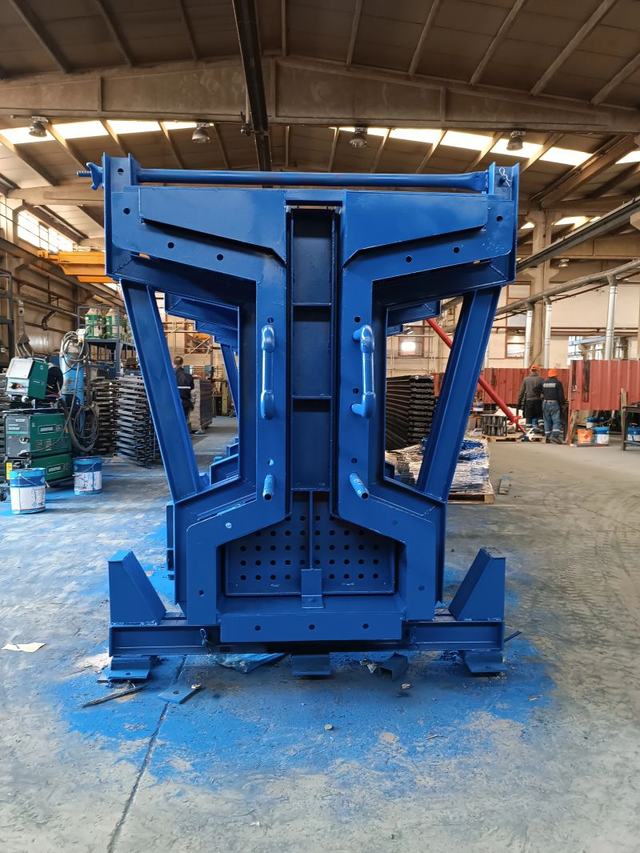
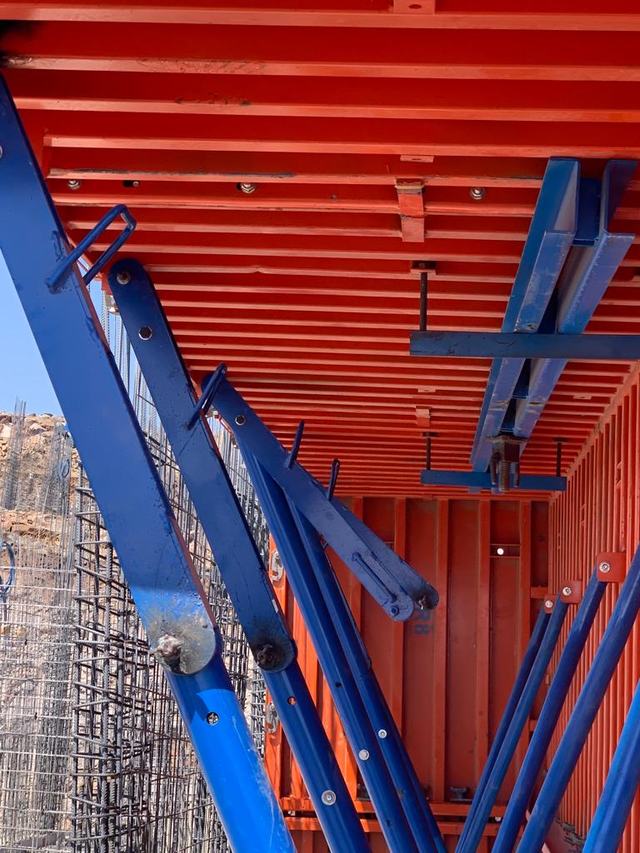
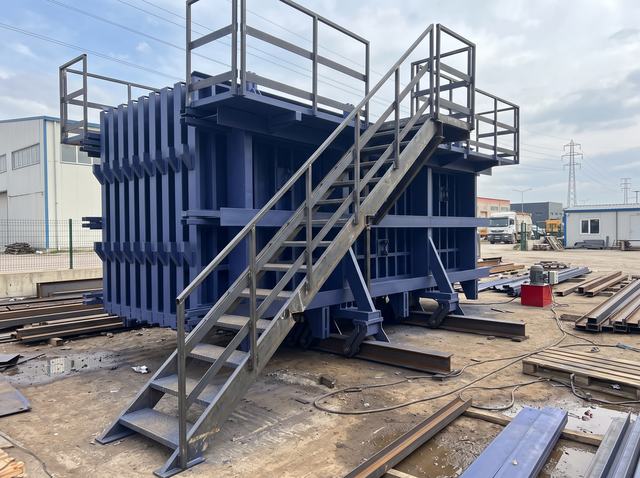
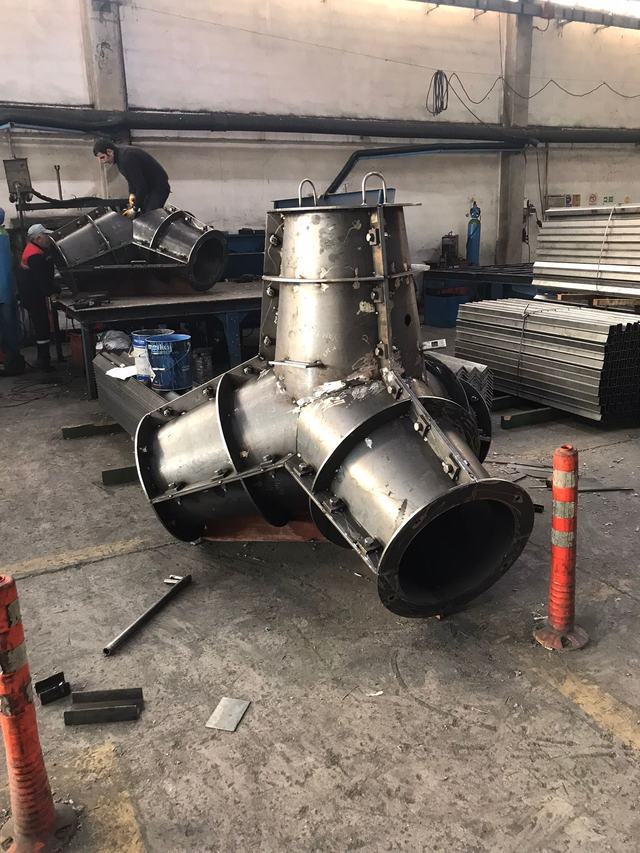
A tetrapod mould cannot be a single piece: with projections in every direction, the element could not be stripped. The mould is designed in segments:
- Usually separable sections covering the body plus three legs and the upper leg
- Each segment releases with its own latch; latches are numbered in stripping order
- Seals sit between segments; grout leakage both marks the surface and makes stripping harder
- Leg ends are given a slight taper and radius
The critical point is that the segments seat in exactly the same position every cycle. If seating drifts, element dimensions change and the stack no longer interlocks correctly. Locating pins are provided on the latch faces for this.
Production steps
- Mould segments are cleaned and a thin film of release agent applied
- Segments are closed in order, with pins and latches seated
- Lifting anchors are placed where used — tetrapods are usually unreinforced concrete
- Concrete is placed from above; vibration is critical in the narrow leg sections
- After setting, segments are opened in reverse order
- The block is lifted out and stacked in the storage yard
- Once sufficient strength is reached it is placed at sea
What being unreinforced means
Most tetrapod types carry no reinforcement; the block works through its mass and geometry. Two consequences follow:
- Concrete quality is strength — mix and curing discipline are critical
- Leg roots are vulnerable — fracture at the leg root during lifting and handling is the most common damage; lifting point and angle must follow the design
What matters in mould design
- The stripping sequence is marked permanently on the mould; the wrong order breaks both element and mould
- Lifting lugs are calculated for the block weight; St 52 and J2 impact grade are preferred here
- Segment weight must suit the site crane; on large tetrapods segments are subdivided further
- Surface treatment is chosen for the marine environment; standard paint is short-lived in salt air
In short
A tetrapod is an unreinforced concrete block that works through its geometry. Its entire mould is built around stripping logic: segmental design, locating pins, seals and taper. Solve those correctly and one mould will cast thousands of blocks.
PRODUCT GROUPS IN THIS ARTICLE
Let us work out the right formwork configuration for your project.
REQUEST A QUOTE